Digital Health That Doesn’t Leave Communities Behind
Designing for Sustainability from the Start
2025-12-11
The Leapfrog Opportunity
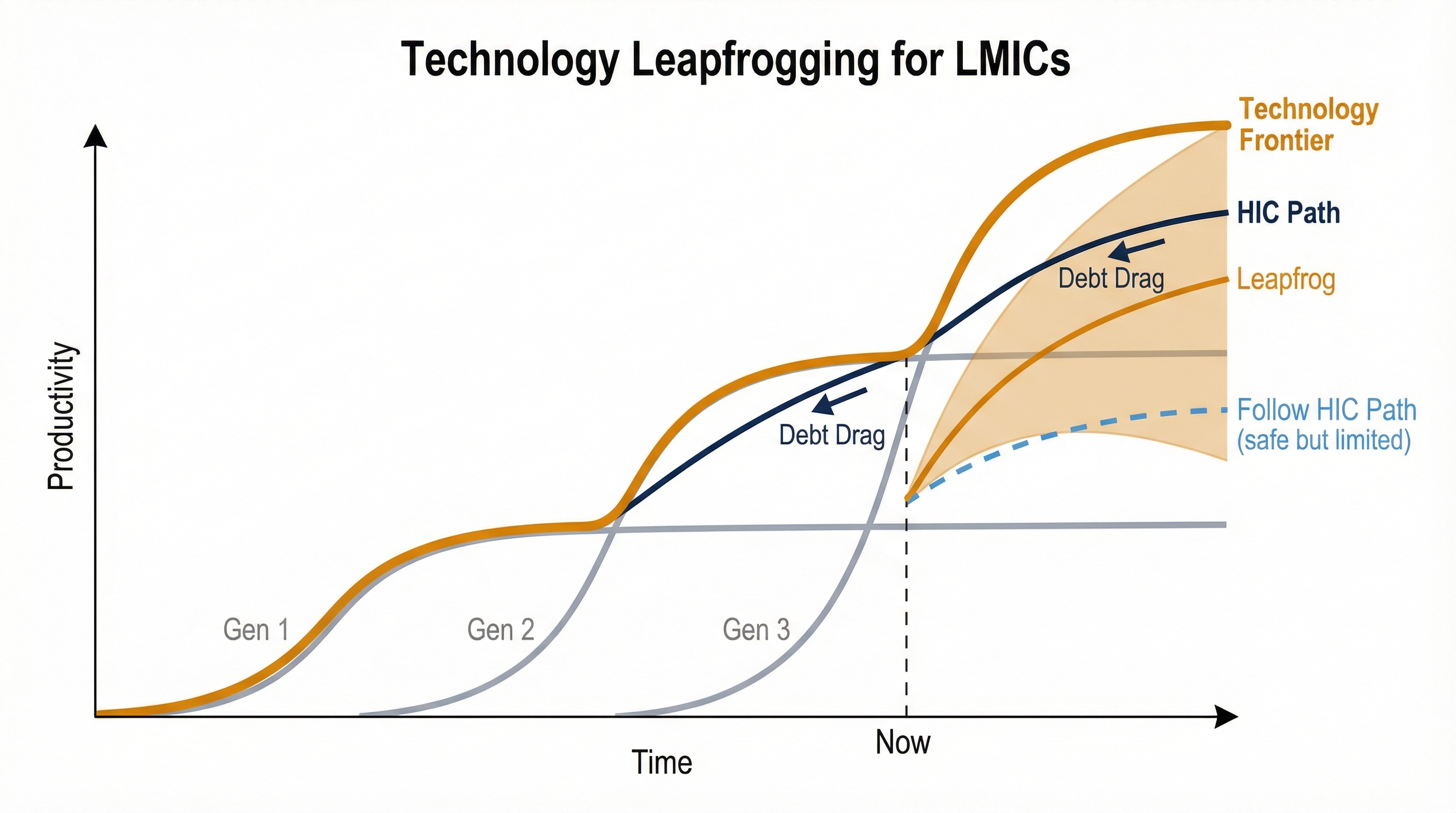
The Choice LMICs Face
Option 1: Follow the HIC Path
- Safe, proven trajectory
- Limited by legacy infrastructure
- Ceiling set by institutional debt
Option 2: Leapfrog to the Frontier
- Skip legacy systems entirely
- Higher potential productivity
- But significant uncertainty
The Question
How do we capture the leapfrog opportunity while managing the risk?
AI is Different
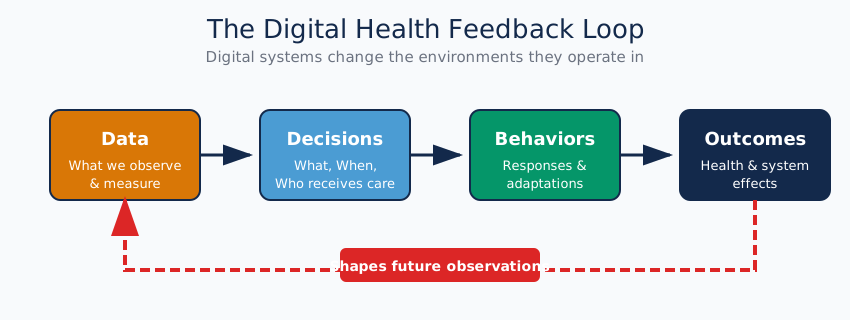
The Complexity
- Data shapes decisions → decisions change behaviors
- Behaviors generate new data → feedback loops
- Yesterday’s patterns ≠ tomorrow’s reality
- Unknown unknowns we can’t predict upfront
The Core Insight
Health systems are information-processing and decision-making factories.
Digital systems transform the factory floor—not just how care is delivered, but what care, when, and to whom.
ECAM: Four Principles for Sustainable AI
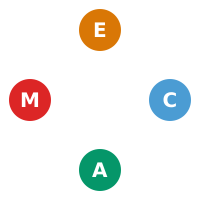
ENGAGE
Stakeholders First
- Map stakeholders before building
- CHWs, patients, officials
- Co-design, not consultation
CALIBRATE
Local Context
- Train on local populations
- Local languages, diseases
- Don’t import HIC models
AUDIT
Bias Continuously
- Equity audits by subgroup
- Gender, geography, SES
- Check for hallucination
MONITOR
Adapt Continuously
- Human override mechanisms
- Retraining triggers
- Performance dashboards
Templin et al. (2024) PLOS Digital Health | Templin et al. (2025) npj Digital Medicine
Baked In, Not Bolted On
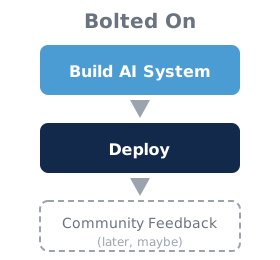
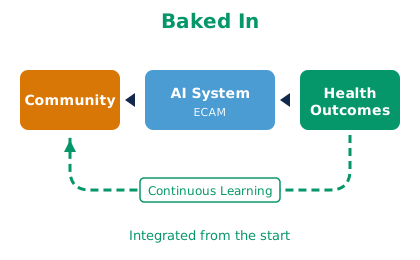
“Sustainable AI requires community engagement baked into the design, not bolted on.”
Thank You
Sean Sylvia, Ph.D.
sean.sylvia@unc.edu
UNC Gillings School of Global Public Health